Why a successful interim assignment starts with understanding the real challenge and ends with a business better equipped for the future.
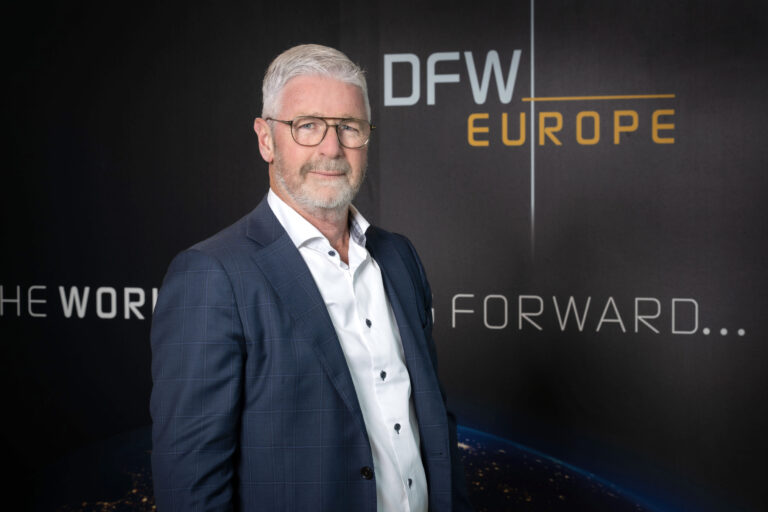
As a board member of Interim Management Worldwide (IMW), an international network of interim management specialists, Wim de Kruijf regularly exchanges insights with colleagues around the world about the challenges their clients face. Markets and circumstances may differ, but the underlying issues are often remarkably similar: businesses growing faster than their structures can support, transformation programmes losing momentum, changes in leadership or the need for experienced management at a critical moment.
The same patterns emerge in the Netherlands. What initially seems like a straightforward request for an interim manager often turns out to be part of a much bigger challenge.
“An interim manager is often brought in when something needs to happen quickly. Naturally, the immediate priorities take centre stage. But that’s precisely when you also need to think about what the business will need tomorrow.”
Looking beyond the brief
At Van de Groep & Olsthoorn, we believe a successful interim assignment starts well before the interim manager walks through the door. Rather than moving straight from a job title to a candidate profile, we first seek to understand why the need has arisen and what needs to change in the longer term.
Two businesses might both be looking for an Interim Operations Director, yet need entirely different things. One may be struggling to restore stability and predictability, while another needs stronger structures, clearer decision-making or more effective leadership.
Understanding what lies behind the initial request is therefore just as important as defining the role itself.
“Experience matters, of course, but it never tells the whole story. The right person also needs to fit the stage the business is at, its culture and the people they will be working with.”
More than solving today’s problems
When an interim manager joins a business, the immediate priorities are usually clear. Operations need to keep running, employees need direction and important decisions cannot be put on hold.
The danger is becoming so focused on urgent matters that the underlying issues remain untouched. Problems may be resolved temporarily, only to resurface further down the line.
A good interim manager looks beyond the symptoms. Why does planning repeatedly break down? Why do decisions always end up with the same person? Which difficult issues have been put off for too long?
“If you solve today’s problem without addressing what caused it, you’re simply postponing the real challenge.”
Getting this right requires both decisiveness and perspective. An interim manager needs to act when necessary, while recognising patterns and identifying what needs to change for the business to move forward.
It is something Wim sees across the international IMW network, too. The most effective interim managers do more than tackle immediate problems. They quickly understand what is holding a business back and help put lasting improvements in place.
What should remain when the assignment ends?
The true measure of a successful interim assignment is not simply whether the immediate problem has been resolved. It is whether the business is in a stronger position to move forward independently.
Are responsibilities clearer? Are decisions being made at the right level? Is knowledge shared rather than concentrated in the hands of one individual? And does the management team have the confidence and structure to take things forward?
These are the questions that shape our approach to selecting interim managers.
A strong CV and years of experience are valuable, but they are not enough on their own. The best candidate is not necessarily the person with the most impressive track record. It is the person who understands what a particular business needs at that moment and can make a meaningful difference within a relatively short period.
“The best interim managers add value quickly, but they also make sure the business can continue to thrive once they’ve moved on.”
For Wim, this is also where the connection between Van de Groep & Olsthoorn’s work in the Netherlands and the international IMW network adds real value. Sharing experiences across markets helps identify common challenges, learn from different approaches and apply those insights to the specific circumstances of each business.
Whether an interim assignment takes place in the Netherlands or elsewhere, the principle remains the same: an interim manager’s role is temporary. The value they leave behind shouldn’t be.